
1898 -1967
The Three Exiles of Samson Schames: Frankfurt, London and New York
Key Facts
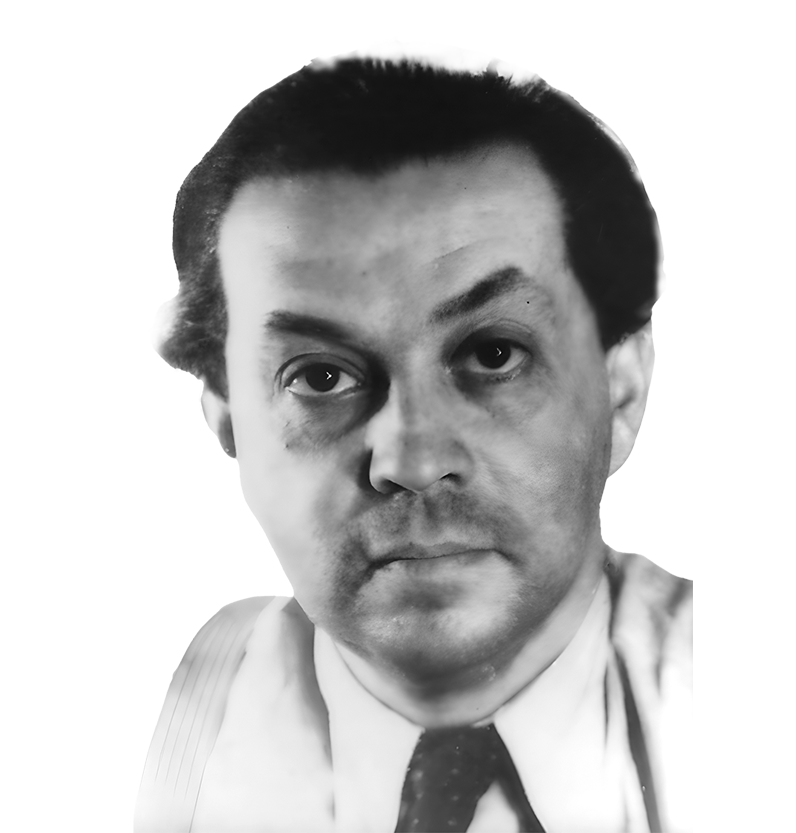
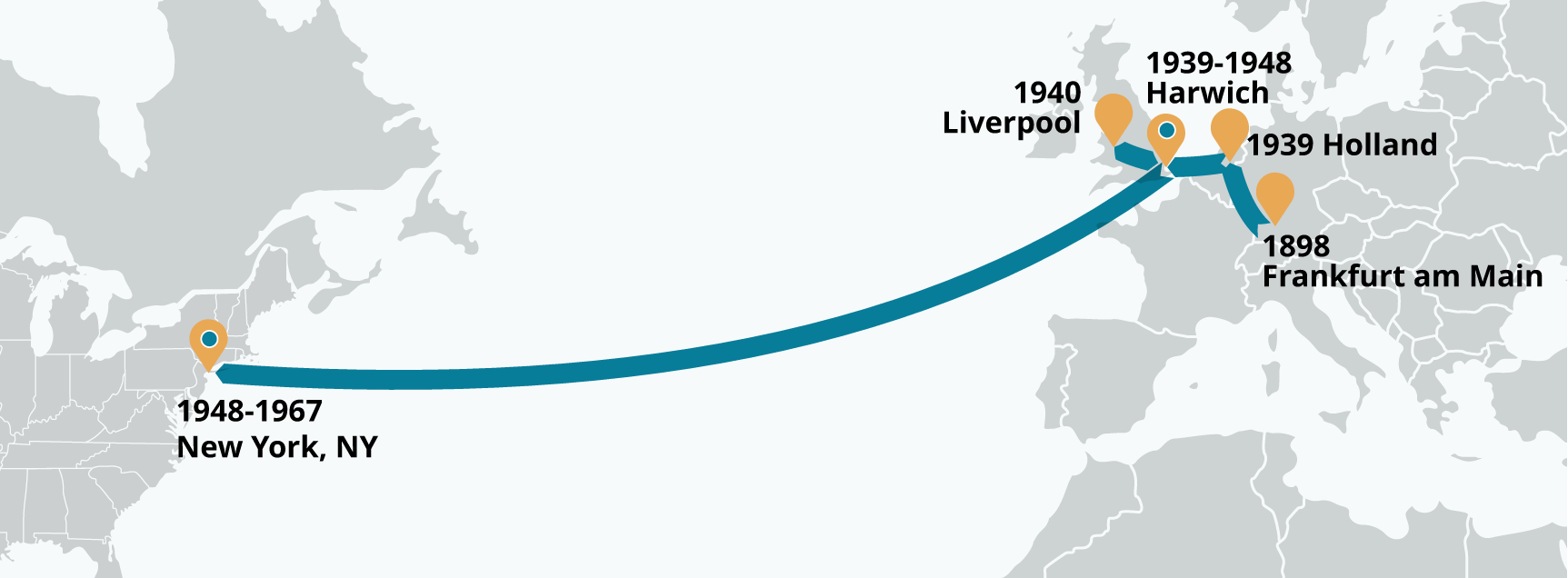
Schames was born in 1898 in Frankfurt which became a center of modern art in the first decades of the 20th century.
In 1937, seven of his works were confiscated from public collections as part of the Nazi campaign against so-called “Degenerate Art.”
He escaped to London in 1939, and spent several months the following year in an English internment camp as an ‘enemy alien’.
After moving to New York in 1948, he continued to create art blending modernist aesthetics with the lived Jewish experience
Did you Know?
At the outbreak of war against Nazi Germany in 1939 all German and Austrian and later Italian nationals were officially classified as ‘enemy aliens’, regardless of their political beliefs or status. All men and boys over 16 were interned in camps throughout the country and abroad, some for several years.
Life in Frankfurt 1898-1939
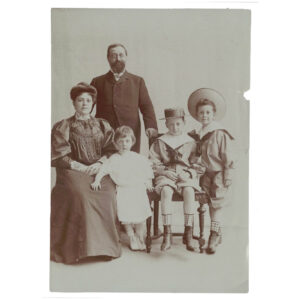
Schames Family, Siegfried “Fritz” Schames standing far right, c. 1904
Historical Museum Frankfurt Ph27563
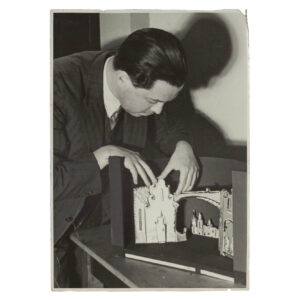
Samson Schames, c. 1935
Historical Museum Frankfurt Ph27563
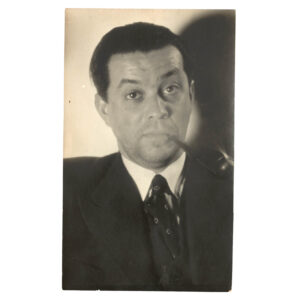
Samson Schames, date unknown
Historical Museum Frankfurt Ph27764
After the National Socialists rose to power in 1933, Schames – like all Jewish artists – was gradually pushed to the margins of the German art world—barred from public exhibitions and stripped of institutional support. Instead, he was only able to show his work to Jewish audiences in exhibitions of the Jüdischer Kulturbund or in his own studio. In 1937, seven of his works were confiscated from public collections as part of the Nazi campaign against “Degenerate Art.” In January 1939, after the violent 1938 November Pogroms (Kristallnacht), he fled Germany.
![Samson Schames, Misrach: Das Schiff [Mizrah: The Ship], 1924. Aquatint on paper, 14 x 11 in.](https://migration.fritzaschersociety.org/wp-content/uploads/2025/08/SS-01-300x300.jpg)
Misrach: Das Schiff [Mizrah: The Ship], 1924
Leo Baeck Institute New York 2021.04
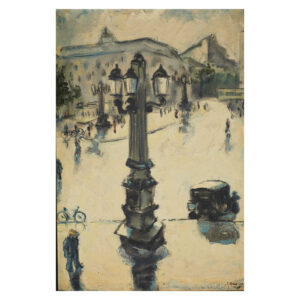
Opera Square, 1930
Jewish Museum Frankfurt JMF 2009-0031
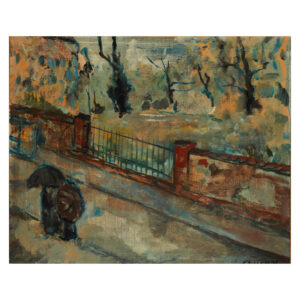
Street in Autumn (Rothschild Park), 1935
Jewish Museum Frankfurt JMF 2001-0001
Opera Square, 1930.
Oil on canvas, 36.8 x 25 in.
Jewish Museum Frankfurt JMF 2009-0031
Life in England 1939-1948
Schames fled to England via Holland and arrived there on 23 January 1939. He lived in Golders Green in northwest London, already home to a significant cohort of German speaking refugees – so much so that bus drivers would announce local stops as ‘Finchleystrasse’. Despite the fact that there was no public enthusiasm for German art, he swiftly began to forge a career. His first exhibition was shown at the Brook Street Galleries in March 1940.
Schames was among the early members of the Free German League of Culture (FGLC), a politically inspired, left-leaning organization offering cultural support to anti-Nazi German refugees in Britain throughout the war.
At the outbreak of war against Germany and its Allies, around 80,000 German and Austrian citizens — many of whom had fled Nazi persecution — were registered as ‘aliens’ and faced immediate incarceration.
From spring to October 1940, Schames was interned in Huyton Camp, near Liverpool, as a so-called ‘enemy alien’. Ever resourceful, without access to traditional painting materials, he invented his own.
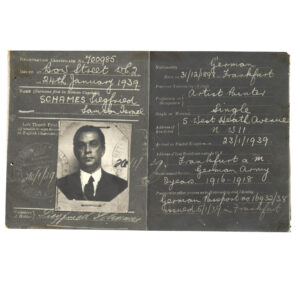
Samson Schames, Arrival in England: Registration Certification, January 1939
Historical Museum Frankfurt

Schames in his Studio in London, not dated
Leo Baeck Institute New York AR 25924 Box 1 Folder 2 No. 033
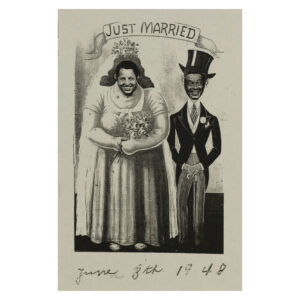
Samson and Edith Schames, Just Married, 5 June 1948
Leo Baeck Institute New York AR 25924 Box 1 Folder 2 No. 005
Execution, 1944
Nails, pieces of sheet metal, glass, ceramic and clay shards in colored gypsum compound, 20 x 15.35 in
Yeshiva University Museum, New York
Released on 13 October 1940, Schames became a volunteer fire guard during The Blitz, a bombing campaign by Nazi Germany against the UK, which lasted from September 7, 1940 to May 11, 1941. He participated in the important Civil Defense Artists’ exhibitions at the Cooling Galleries in Bond Street. He began creating mosaics using shards of window glass, rusted nails, burnt wood and other rubble he scavenged from the streets and bombed buildings. These works, which he called “war mosaics,” were deeply symbolic—transforming destruction into artistic expression and becoming a means of processing trauma and displacement.
In 1942 and 1943, Schames held solo shows at fellow internee and friend Jack Bilbo’s Modern Art Gallery. He also contributed regularly to Civil Defence, FGLC and Ben Uri Museum exhibitions where his work was well-received by the public and in the press.

The Gate: Internment camp at Huyton, near Liverpool, 1940
Leo Baeck Institute New York 78.1688
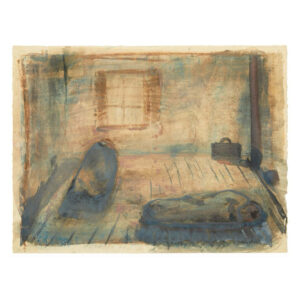
Huyton Internment Camp, Sleeping Place, 1940
Jewish Museum Frankfurt JMF2004-0005
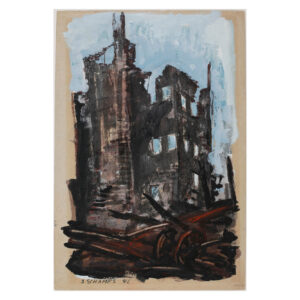
Bombed House and Broken Wheel Barrow, 1941
Jewish Museum Frankfurt JMF 98-019
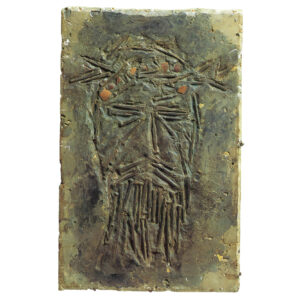
Crown of Thorns, 1941
Yeshiva University Museum, New York 1998.595
![Samson Schames, Träne [The Tear], 1941. String and hemp fiber print in dyed chalk/cement paste; shards and wooden fragments, in old frame, 22.52 x 17.91 in.](https://migration.fritzaschersociety.org/wp-content/uploads/2025/08/SS-09-300x300.jpg)
Träne [The Tear], 1941
Leo Baeck Institute New York 2016.06
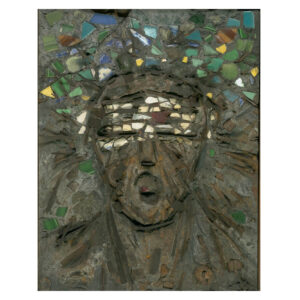
Execution, 1944
Yeshiva University Museum, New York
Boat Docked at Harbor, 1952
Gouache and ink on paper, 10 x 13 in.
Leo Baeck Institute New York 2023.126
Life in New York 1948 –1967
In 1947 and 1948, Edith and Samson immigrated to the United States, got married and settled in the Forest Hills neighborhood of Queens, New York. He continued to develop his art and also worked on commissions for synagogues and Jewish institutions, contributing significantly to postwar Jewish art and religious symbolism.
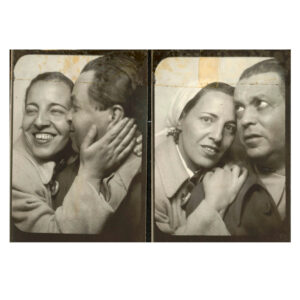
Detail of Samson Schames with Wife Edith in NYC Photobooth, June 1949
Historical Museum Frankfurt Ph27661
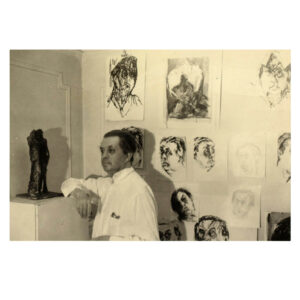
Samson Schames in his Studio, December 1963
Leo Baeck Institute New York AR 25924 Box 1 Folder 2 No. 020
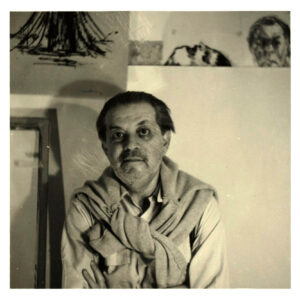
Photograph of Samson Schames, not dated
Leo Baeck Institute New York AR 25924 Box 1 Folder 2 No. 018
In 1950, Schames presented a solo exhibition titled “A Monument to Hitler’s Infamy” at the Carlebach Gallery in New York. His themes were now cityscapes and landscapes, interiors and still lifes, portraits and self portraits, which he painted, drew, and collaged. While he found a degree of stability and recognition – exhibiting in major cities like Paris, Jerusalem, and New York – he also encountered a more subtle form of exclusion. Although his work often moved away from themes of Jewish memory and endurance, in an art scene increasingly dominated by abstract expressionism and formal experimentation, his work was often sidelined as too narrative, too historical, or simply unfashionable.
Schames died in 1967, leaving behind a body of work that blends modernist aesthetics with spiritual and historical depth. He only gradually began to achieve posthumous recognition by the end of the 1980s.
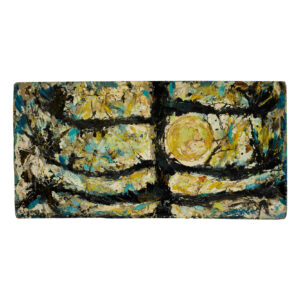
Tree, 1951
Jewish Museum Frankfurt JMF 2007-0015
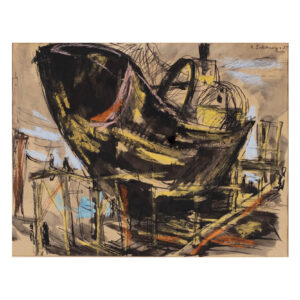
Boat Docked at Harbor, 1952
Leo Baeck Institute New York 2023.126
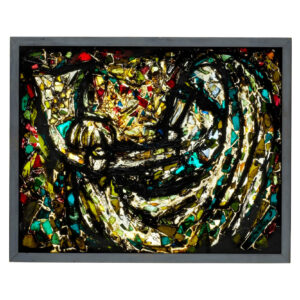
Blowing the Shofar, c. 1956
Jewish Museum Frankfurt JMF 1989-0155
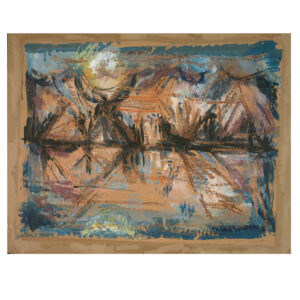
Granite Quarry No. 1, 1958
Leo Baeck Institute New York 2007.97
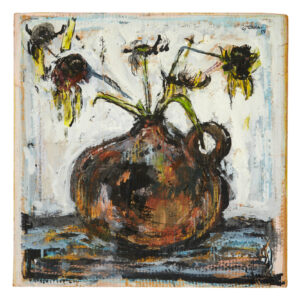
Still Life, 1959
Jewish Museum Frankfurt JMF 2007-0004
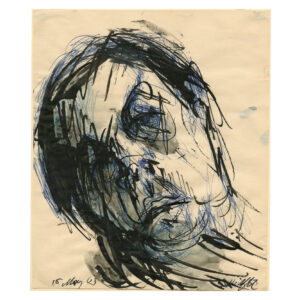
Self-Portrait, 15 May 1963
Leo Baeck Institute New York 78.256
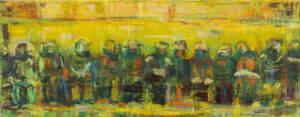
Subway Riders, n. d.
Estate of Catherine O'Neill McCaffrey, Courtesy of James and Maureen McCaffrey
Tree, 1951
Oil on hardboard, 16.1 x 32.3 in.
Jewish Museum Frankfurt JMF 2007-0015
Resilience in the Face of Exclusion and Persecution
In Frankfurt, despite the Nazis labeling his paintings “Degenerate Art” and prohibiting him from exhibiting in mainstream venues, he continued to create and show art and theater designs within the Jewish community.
In wartime London, where his art took a dramatic and innovative turn, he participated in several important exhibitions at well-regarded galleries, and received praise for his paintings and mosaics.
In post-war New York, the center of artistic activity and power, he was optimistic about new beginnings but discovered he was again out of step with the conditions of the time. Yet he continued creating paintings and glass mosaics, often reflecting the Jewish experience and diverse themes both personal and universal.
Watch the Conversations
The Three Exiles of the German-born artist Samson Schames (1898-1967), international panel
Featuring Annika Friedman (Germany), Rachel Dickson, PhD, (UK) and Ori Z. Soltes, PhD (US). Moderated by Rachel Stern.
August 27, 2025
Samson Schames (1898-1967): Family and Friends
Featuring Natalie Green Giles, James McCaffrey, and Charlie Scheidt. Introduced by Rachel Stern, moderated by William (Billy) Weitzer.
September 17, 2025
Additional Resources
Lost and Found: The Art and Life of Samson Schames
Leo Baeck Institute, New York
Date: 2025
Samson Schames: Fragments of Exile
Presentation by Annika Friedman, Jewish Museum Frankfurt
Date: 2023